


Main content
David Klenerman, Shankar Balasubramanian and Pascal Mayer 2026 Princess of Asturias Award for Technical & Scientific Research
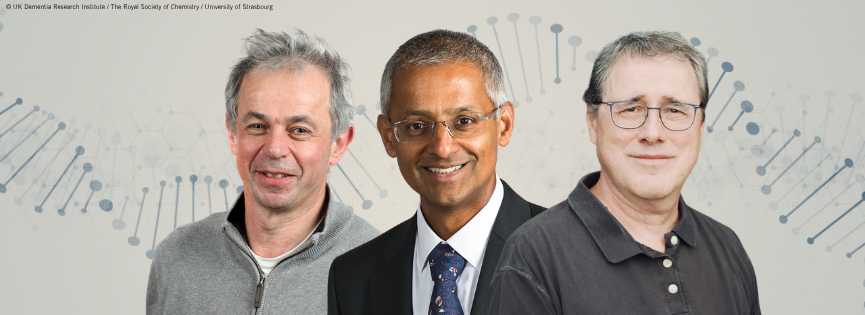
Presented in 2000, the sequencing of the human genome was the result of a decade and a half of research. Genomes are now sequenced in just a few hours. The SARS-CoV-2 virus, which caused the COVID-19 pandemic, was thus identified and sequenced extremely quickly, allowing vaccines to be ready to prevent infection in less than a year and the response to the emergence of new variants to be equally immediate. This advance was made possible by next-generation DNA sequencing technologies, developed at the end of the last century by Balasubramanian, Klenerman and Mayer. Through the biotechnology company they named Solexa (now Illumina), the first two created a fast, cheap and efficient commercial method of genome sequencing, one of whose key components was the solid-phase DNA amplification (SPA) developed by Pascal Mayer. Before the developments made by these three researchers, sequencing a complete human genome could require months and cost millions of dollars. Now it can be done in a day; that is, more than a million times faster and for less than a thousand dollars. This technology is based on massive parallel DNA sequencing, which allows billions of genes to be read at once: it breaks the genome into small fragments or clusters of DNA, creates thousands of copies of them and groups them into a kind of island. When combined, they can be read simultaneously and more easily using fluorescence techniques. These technologies have become the most widely-used genetic sequencing method in the world and have revolutionized research in cell biology, ecology, biomedicine and forensic medicine. Furthermore, this method has opened up new fields of research, such as the study of the human microbiome, and has a growing number of applications in clinical practice in infectious diseases, cancer and rare diseases. It has also led to the first next-generation sequencer (MiSeq) for clinical diagnostics approved by the U.S. Food and Drug Administration (FDA). Solexa/Illumina sequencing is used in projects such as the International Cancer Genome Project and Genomics England for the British National Health Service.
In addition, in recent years Balasubramanian has made significant contributions in the field of nucleic acid chemistry, structure and function, and in epigenetics. Klenerman has made important contributions to microscopy that allow obtaining high-resolution 3D images of living cells and protein folding, and to the study of the accumulations of protein plaques characteristic of Parkinson’s and Alzheimer’s. Mayer works on the application of AI in the search for therapeutic substances.
Sir David Klenerman (United Kingdom, 9th September 1959) graduated in Chemistry from the University of Cambridge in 1982 and received his PhD in 1986 from the same institution. Following a postdoctoral stay at Stanford University (USA) as a holder of a Fulbright scholarship, he returned to the United Kingdom in 1987 to work at BP Research until joining the Chemistry department at Cambridge in 1994 to lecture in Biophysical Chemistry and is currently a Royal Society GSK Research Professor. He was knighted by Queen Elizabeth II in 2019. He is a member of The Royal Society (2011 Prince of Asturias Award for Communication and Humanities), which awarded him its Royal Medal in 2018, and of many other scientific institutions. Among other awards, he has received the Interdisciplinary Prize from the Royal Society of Chemistry (UK, 2007), the Millennium Technology Prize (Finland, 2020) and the Breakthrough Prize in Life Sciences (USA, 2022). In 2024 he received the Novo Nordisk Prize (Denmark) and the Canada Gairdner International Award. According to Scopus, he is the author of 345 scientific articles, has accumulated 24 444 citations, and has an h-index of 79.
Sir Shankar Balasubramanian (Chennai, India, 30th September 1966) did his undergraduate degree at the University of Cambridge, where he also earned his PhD in Chemistry in 1991. Following a stay as a researcher at Pennsylvania State University, he joined Cambridge in 1994, where he has carried out his work and where he has been Herchel Smith Professor of Medicinal Chemistry since 2008, as well as heading a research group at the Cancer Research Institute. Among his numerous distinctions are the Glaxo-Wellcome Award for Innovative Organic Chemistry (UK, 1998), the Royal Society Mullard Award (UK, 2009), the Tetrahedron Prize for Creativity in Organic and Biomolecular Chemistry (Netherlands, 2013), the Charlie Butcher Award (USA, 2017), the Millennium Technology Prize (Finland, 2020) and the Breakthrough Prize in Life Sciences (USA, 2022). He is a member of The Royal Society, which awarded him its Royal Medal in 2018, and of many other international academies and scientific societies. He was knighted by Queen Elizabeth II in 2017 and holds three honorary doctorates. In 2024, he received the Novo Nordisk Prize (Denmark) and the Canada Gairdner International Award and was inducted into the U.S. National Inventors Hall of Fame. In 2025 was awarded the Khorana Prize by the Royal Society of Chemistry. He has published around three hundred scientific articles and one book, and holds eleven international patents. According to Google Scholar, he has accumulated 66 107 citations and has an h-index of 117.
Pascal Mayer (Moselle, France, 14th July 1963) graduated in Biochemistry in 1987, obtained a Master’s degree in Molecular Biology in 1988 and a PhD in Macromolecular Biophysics in 1991; all at the Louis Pasteur University in Strasbourg. Between 1991 and 1994, he completed a postdoctoral fellowship at the University of Ottawa and spent another two years at the Paul Pascal Research Center belonging to the French National Centre for Scientific Research (CNRS). Since 1996, he has built his career in private companies: first at the Glaxo-Wellcome Research Institute in Switzerland (currently the Pharmacological Research); later, between 2001 and 2009, at Manteia Predictive Medicine, where he was Chief Science Officer. Also in 2004, he co-founded Haploys; and, between 2009 and 2013, he held a variety of positions at BioFilm Control. In 2014, he founded the biotechnology company Alphanosos, which he also currently manages. He has been an associate professor at Strasbourg University since 2024. In 2022, he received the Breakthrough Prize in Life Sciences along with Balasubramanian and Klenerman. In 2024, he likewise shared the Canada Gairdner International Award with them and received an honorary doctorate from the University of Ottawa. According to Scopus, he is the author of 16 scientific articles, has accumulated 449 citations, and has an h-index of 2.
End of main content