


Main content
Julian Barnes 2026 Princess of Asturias Award for Literature
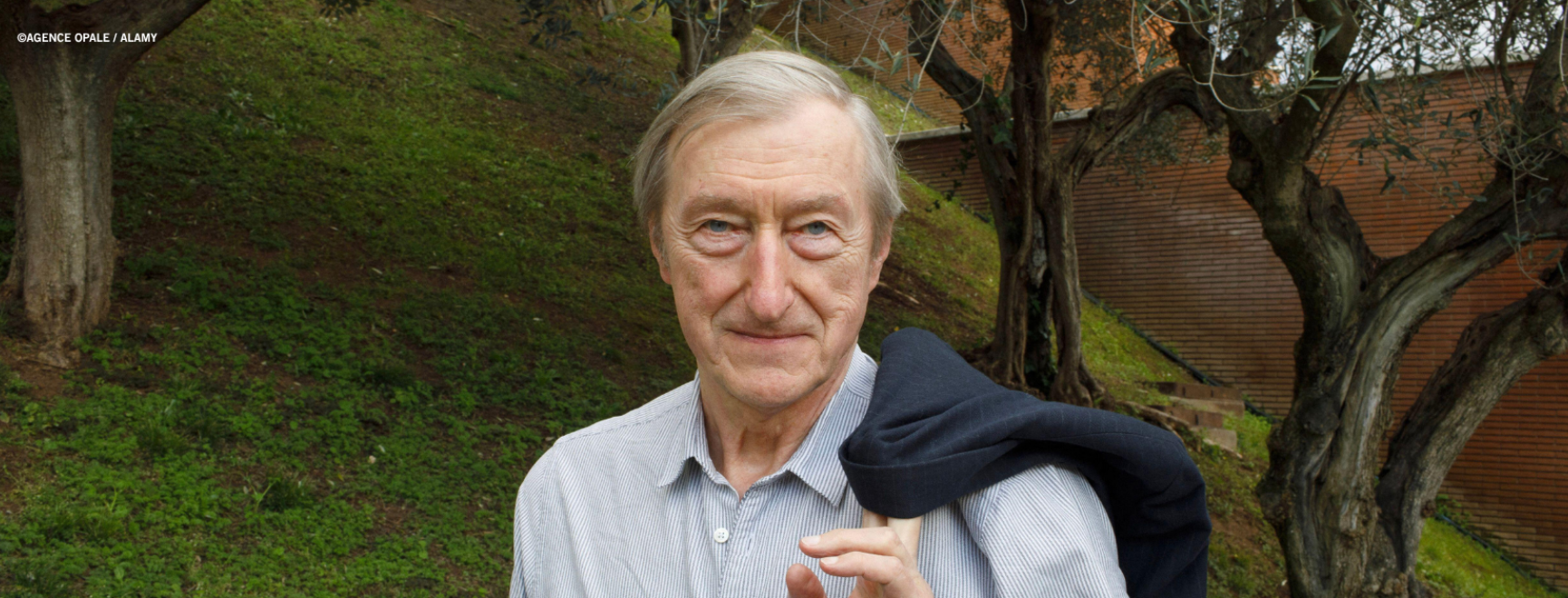
Your Majesties, Your Royal Highnesses, distinguished guests,
When I was young, and beginning to learn about books, and art and music, I naturally assumed that each of these arts had, over the course of centuries, demonstrated an inevitable progress. This was a tacit assumption, based on the fact that everything else in the world had progressed too: science, technology, society, politics...And so it must be with the arts. We were taught them chronologically, and mere chronology implied progression: primitivism, classicism, romanticism, realism, naturalism, impressionism, symbolism, and there at the end, modernism, post-modernism, and so on. And newer meant better.
When I was about twenty, I read Voltaire’s dismissal of Shakespeare: he admitted his genius, but lamented that he didn’t have the least spark of good taste, and not the slightest understanding of dramatic rules; further, his effect on British theatre had been disastrous. But around the same time I read a book by the Polish critic Jan Kott called Shakespeare Our Contemporary, which explained how the dramatist had understood and depicted – and predicted - the modern world with clarity and authority. This was a little confusing, to say the least, but possible resolvable.
The arts may give the impression of progress, but are often expressing versions of old truths in new ways. When Impressionism was riding high in Paris, Renoir visited Spain and cut short his visit for the following reason: ‘When you look at Velasquez, you realise that everything has already been said.’ And most writers and artists have such chastening moments at some point in their lives. For me, one came when I read the Quixote for the first time, and came across some of my favourite moments in all literature.
As you know, the first Part of the Quixote was published in 1605, the second in 1615, but shortly before that a spurious, pirated Second Part had appeared. The Don and Sancho Panza, to their bewilderment, come across people who have read about them not just in the original Part One but also in this spurious second part. They overhear their characters being discussed and disparaged, and at one point meet a character from the spurious edition who denies to Quixote’s face that he even is Quixote, because he, the spurious character, had known the real Don. What might we call such scenes? Ludic, post-modern, self-referential, intertextual, metafictional?
And so, I no longer think of the arts as being progressive, each movement improving on the previous one. I prefer to think of us all sitting at an enormous round table, in a Spanish inn perhaps, discussing our work with one another across the centuries: I imagine Renoir asking Velasquez how on earth he did it, Voltaire being corrected for his superior view of Shakespeare, Flaubert (who described himself as ‘an Old Romantic’) expressing his veneration for and to Cervantes, and also, perhaps, scowling across at that Englishman sitting over there on a low stool, who had the impudence, and the folly, a century after the Frenchman’s death, to write a book called Flaubert’s Parrot.
End of main content