


Main content
Svalbard Global Seed Vault 2026 Princess of Asturias Award for International Cooperation
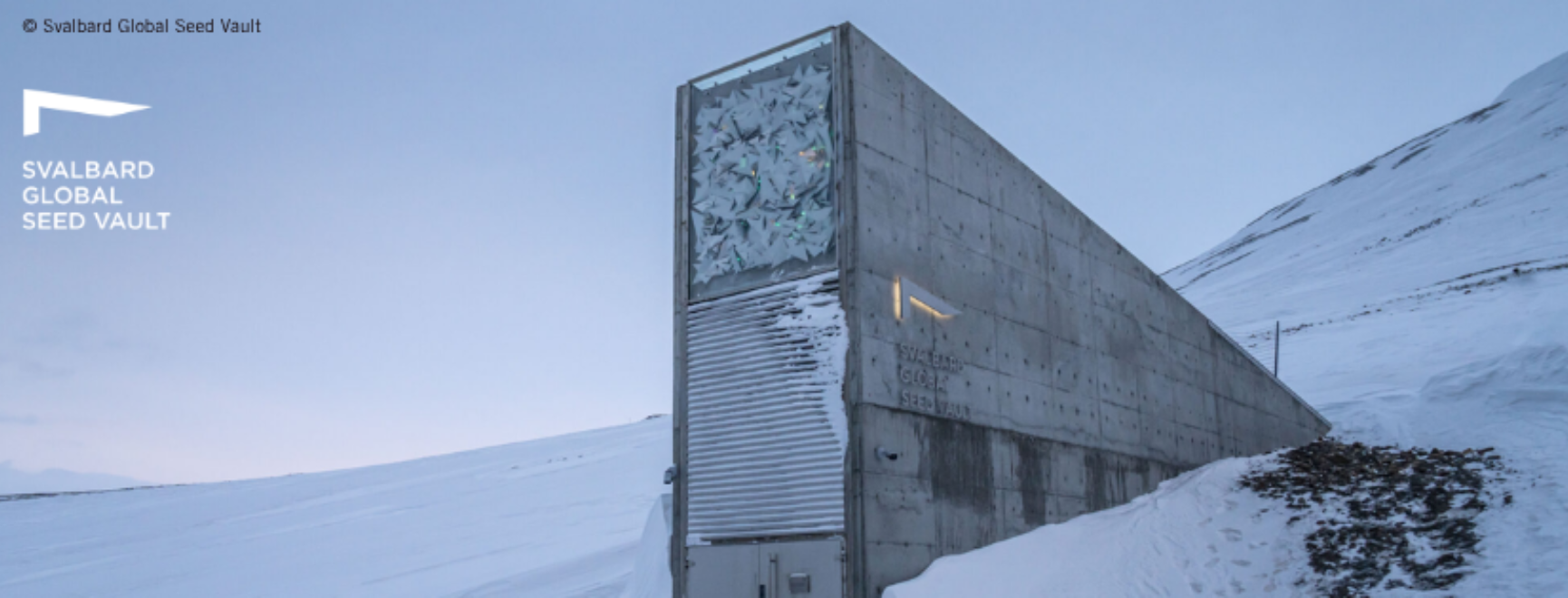
The Svalbard Global Seed Vault is an underground seed bank located on the island of Spitsbergen, in the Norwegian archipelago of Svalbard. Opened in 2008, it occupies an area of more than a thousand square metres, spread over three warehouses. Its goal is to safeguard the diversity of crop seeds in order to guarantee future supply in case of loss due to natural disasters, human conflicts, policy changes, mismanagement or any other circumstance. The Svalbard Global Seed Vault is owned and administered by the Ministry of Agriculture and Food on behalf of the Kingdom of Norway. The Nordic Genetic Resources Center (NordGen) operates the facility and maintains a public online database of samples stored in the Vault. The Crop Trust provides financial support for Seed Vault operations and seed deposits from developing countries. This international non-profit organization is dedicated to conserving crop diversity in genebanks and ensuring it is available for use worldwide. Its contributors include countries, institutions and private organizations, including the Government of Spain, the European Commission and the Gates Foundation (2006 Prince of Asturias Award for International Cooperation). An International Advisory Panel oversees the management and operations of the Seed Vault.
Former Secretary-General of the United Nations Ban Ki-moon described the Vault as a “global insurance policy” and a “gift to humanity and a symbol of peace” during a visit to Svalbard in 2009. With a humanitarian purpose, the Svalbard Global Seed Vault is part of the United Nations Food and Agriculture Organization (FAO) international system for the conservation of plant genetic.
The depositing of seeds is done free of charge and their ownership indisputably remains with the depositing genebank, which is also the only one that can request their return. To date, the Vault stores more than 1.3 million seed samples from around 6 300 plant species –mostly varieties of rice, wheat and barley– belonging to 129 depositing institutions and governments. Other crops represented include sorghum, Phaseolus bean species, maize, cowpeas, soybeans, kikuyu grass and chickpeas. Two-thirds of the deposits come from the international research centres forming the Consultative Group on International Agricultural Research (CGIAR), together with the International Maize and Wheat Improvement Centres (Spanish acronym, CIMMYT), the International Center for Agricultural Research in Dry Areas (ICARDA) and the International Center for Tropical Agriculture (Spanish acronym, CIAT), as well as the International Rice Research Institute (IRRI) and the International Crops Research Institute for the Semi-Arid Tropics (ICRISAT). The United States, Germany, Canada and the Netherlands are the countries that have made the largest contributions.
The Vault has already shown its usefulness and relevance; in 2015, with the escalation of war in Syria, ICARDA was forced to evacuate its headquarters in Aleppo. Its seed bank, which was devastated, contained 150 000 samples of cereals, food and feed from more than one hundred countries. A significant part of this collection had been secured through duplication and storage in the Svalbard Vault. This was able to be withdrawn starting from the end of that year –with a second phase in 2017– in order to be planted in Lebanon and Morocco and to return a copy to the vault on the Norwegian archipelago. In 2024, 61 genebanks deposited more than 64 000 samples, record numbers in the history of the Vault, including 21 institutions that did so for the first time. In 2025, the Vault received more than two thousand seed samples of sorghum, pearl millet, peanut, sesame, watermelon and Vigna melon from the Sudan National Genebank, which was attacked during the African country’s civil war. The first deposit of the current year 2026 was made in February, comprising seeds from two new countries, Guatemala and Niger, as well as the first deposit of olive seeds in the history of the Vault, with outstanding participation from Spanish institutions.
The Svalbard Global Seed Vault was included by Time magazine in its list of Best Inventions of 2008. In 2024, Geoffrey Hawtin and Cary Fowler, scientists who played a key role in its creation, were awarded the World Food Prize (USA).
End of main content